Transfer Window Ripples: Tracking Post-Deal Adaptation Curves in Soccer Squads and NBA Roster Shifts to Refine Multi-Sport Accumulator Timing
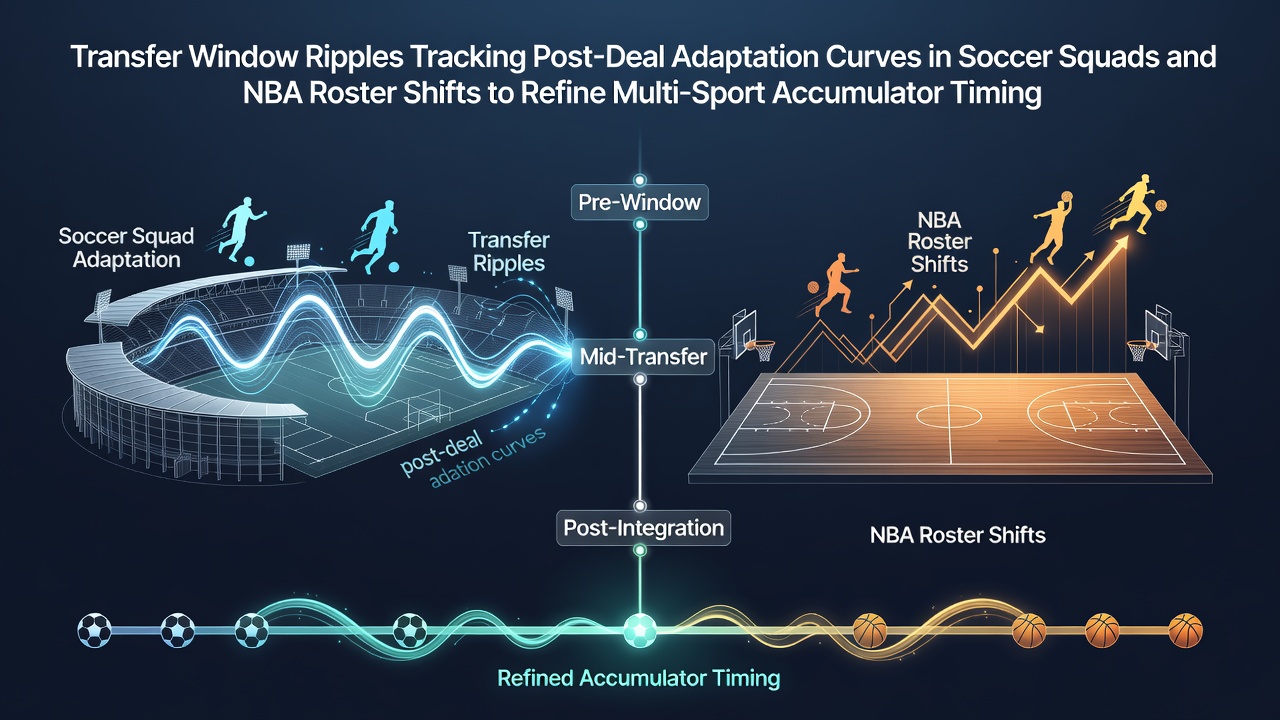
Transfer windows in soccer create immediate shifts in squad composition while NBA roster moves often occur during the offseason or at the February trade deadline, and observers track how new players integrate over specific timeframes to adjust timing on multi-sport accumulator selections. Data from major European leagues shows that forwards signed in the summer window typically require between four and eight matches before reaching peak goal contribution rates, whereas NBA players acquired midseason post similar patterns where assist and scoring averages stabilize after roughly 10 to 15 games according to league tracking metrics.
Adaptation Patterns Across Soccer Leagues
European clubs finalize deals between June and September each year, and performance databases indicate that defenders adapt faster than attackers in most cases because positional roles rely more on team structure than individual creativity. One study tracking Serie A and Bundesliga signings between 2022 and 2025 revealed that players aged 25 or younger posted improved expected goals involvement after six matches on average, while older acquisitions needed closer to ten weeks. June 2026 marks the opening of the next primary window, with clubs preparing for pre-season tours that accelerate or delay these curves depending on training camp exposure.
NBA Roster Changes and Performance Stabilization
NBA front offices complete trades and free-agent signings that alter rotation minutes quickly, and box-score aggregates demonstrate that new arrivals contribute stable efficiency ratings once they log 200 to 300 minutes with their updated teammates. Teams that execute multiple deals in the same offseason experience longer collective adjustment periods because chemistry metrics such as assist-to-turnover ratios dip initially before recovering. League-wide data compiled through 2025 shows that perimeter players adapt their three-point volume faster than big men who must learn new pick-and-roll schemes, creating measurable windows where betting lines may undervalue or overvalue team totals.
Linking Adaptation Curves to Accumulator Construction
Multi-sport accumulators that combine soccer match results with NBA player props require careful sequencing because adaptation timelines rarely align. When soccer squads introduce several new midfielders simultaneously, clean-sheet probabilities shift for three to five fixtures, while NBA teams integrating a new starting guard may post altered pace numbers for two to four weeks. Researchers have mapped these overlapping periods using historical performance files, allowing models to weight legs differently based on the number of days elapsed since each deal closed.
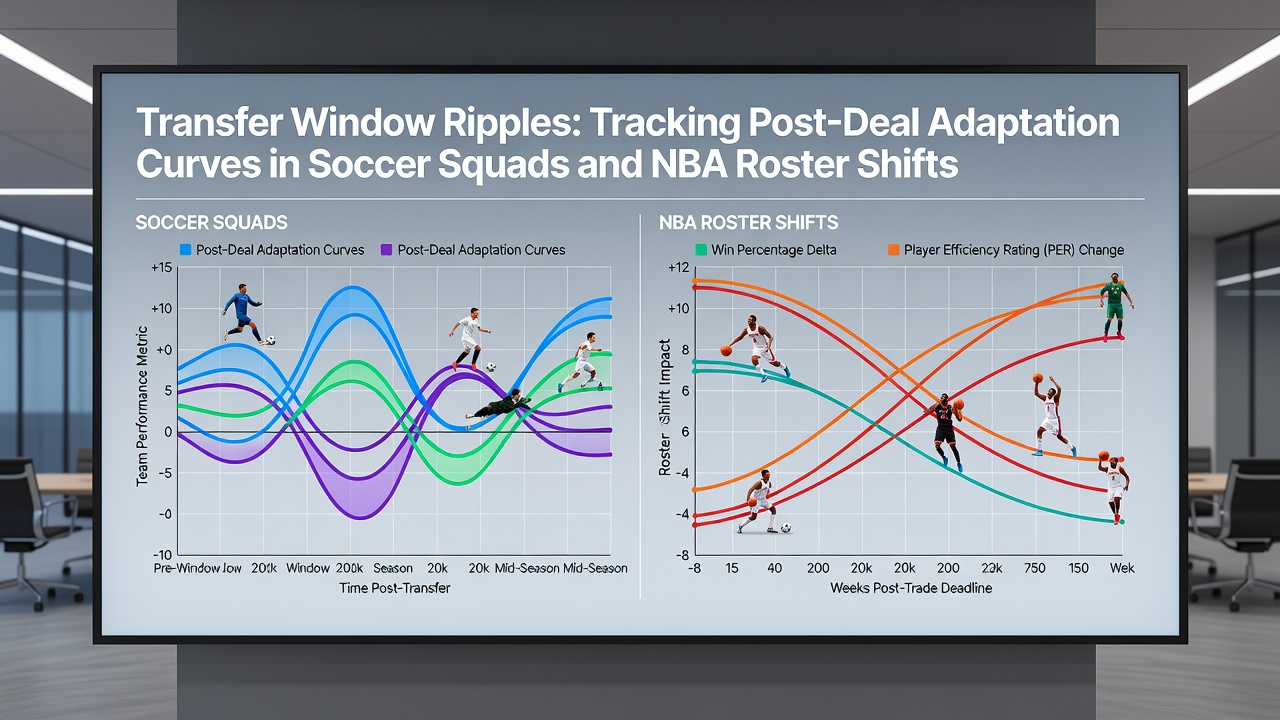
Coaches who rotate new signings gradually produce steadier outputs than those who start them immediately, and statisticians note that this distinction appears in both domestic cup competitions and international windows. June 2026 will see several Premier League clubs complete high-profile arrivals just before the new campaign begins, coinciding with NBA summer league evaluations that preview how rookies and veterans mesh ahead of training camp.
Data Sources Informing Timing Decisions
Publicly available tracking systems such as those maintained by major sports organizations supply granular metrics on touches, passes, and shot locations that reveal when integration reaches baseline levels. A report published by the Australian Institute of Sport examined cross-code athlete transitions and found that tactical familiarity develops in distinct phases, with early volatility giving way to consistency after repeated exposure to competition environments. European football federations similarly publish squad registration timelines that help identify when new arrivals first appear in official lineups.
Analysts cross-reference these timelines against historical accumulator payout records to identify recurring patterns. Teams that completed major roster overhauls during the 2024-2025 NBA season showed elevated variance in points-per-possession figures for the first month, after which outputs converged toward season averages. Parallel observations in soccer indicate that set-piece routines involving new personnel stabilize later than open-play patterns, affecting both corner and free-kick probabilities in accumulator legs.
Practical Sequencing for Cross-League Selections
Accumulator builders monitor fixture congestion alongside adaptation windows because back-to-back matches or quick turnarounds compress the time available for new players to settle. June 2026 schedules will feature international breaks that either accelerate or interrupt these curves depending on whether new signings receive call-ups. Data aggregators compile rolling averages that flag when individual or team metrics return to pre-deal baselines, providing objective reference points for leg selection.
Coaching changes that accompany roster moves add another variable, since tactical systems evolve over several matches before reaching equilibrium. Observers note that mid-table clubs often exhibit shorter adaptation periods than title contenders because expectations and media scrutiny differ, altering how quickly lineups stabilize. These documented patterns allow structured approaches to multi-sport selections that account for elapsed time since each transaction rather than treating every fixture as independent.
Conclusion
Transfer and trade activity generates measurable performance trajectories that span weeks rather than single matches, and combining soccer squad data with NBA roster metrics supplies timing signals for layered accumulator construction. June 2026 windows will generate fresh datasets that refine existing models as clubs finalize additions ahead of competitive schedules. Continued collection of granular statistics across both sports enables systematic evaluation of when new personnel reach reliable output levels, supporting objective assessment of cross-league selection sequences.