Fixture Congestion Ripples: How Packed Calendars in Football and Tennis Tours Create Edges in Accumulator Strategies

Fixture congestion ripples through football leagues and tennis tours each season, where overlapping competitions leave players with limited recovery windows and create measurable shifts in performance data that accumulator bettors track across multiple legs. In July 2026, clubs in major European leagues prepare for pre-season tours while ATP and WTA players compete on hard courts after grass-court swings, and these overlapping calendars produce patterns in results that extend beyond single events into multi-leg selections.
Football Schedule Overlaps and Their Effects
European football calendars pack domestic leagues, cup ties, and continental tournaments into tight blocks, with teams often facing three matches in seven days during winter and spring stretches. Data from league records shows increased rotation in squads leads to higher instances of draws and lower goal tallies when starters sit out, patterns that accumulator builders incorporate when layering under totals or draw selections across several fixtures. Observers note that clubs balancing Champions League midweeks with weekend league games adjust lineups based on travel distances, which alters expected goal metrics tracked by analytics platforms.
Those who study squad management records find that teams with extended bench depth maintain steadier defensive structures during congestion periods, while thinner rosters show spikes in clean sheet failures. This information feeds into accumulator chains where bettors pair reduced scoring projections from one league with similar trends in another, building longer selections that reflect cumulative fatigue rather than isolated form.
Tennis Tour Density and Recovery Patterns
Tennis calendars run nearly year-round, with players moving from Australian hard courts to clay, grass, and back to hard surfaces within months, and the 2026 schedule continues this flow with events stacked in July after Wimbledon. ATP data indicates that players entering consecutive tournaments within ten days post-major exhibit drops in first-serve percentages and break-point conversion rates, metrics that surface in accumulator models focused on game totals or set handicaps. Surface transitions compound these effects, because players adapting from grass to hard courts often face quicker points and altered rally lengths that shift win probabilities in early rounds.
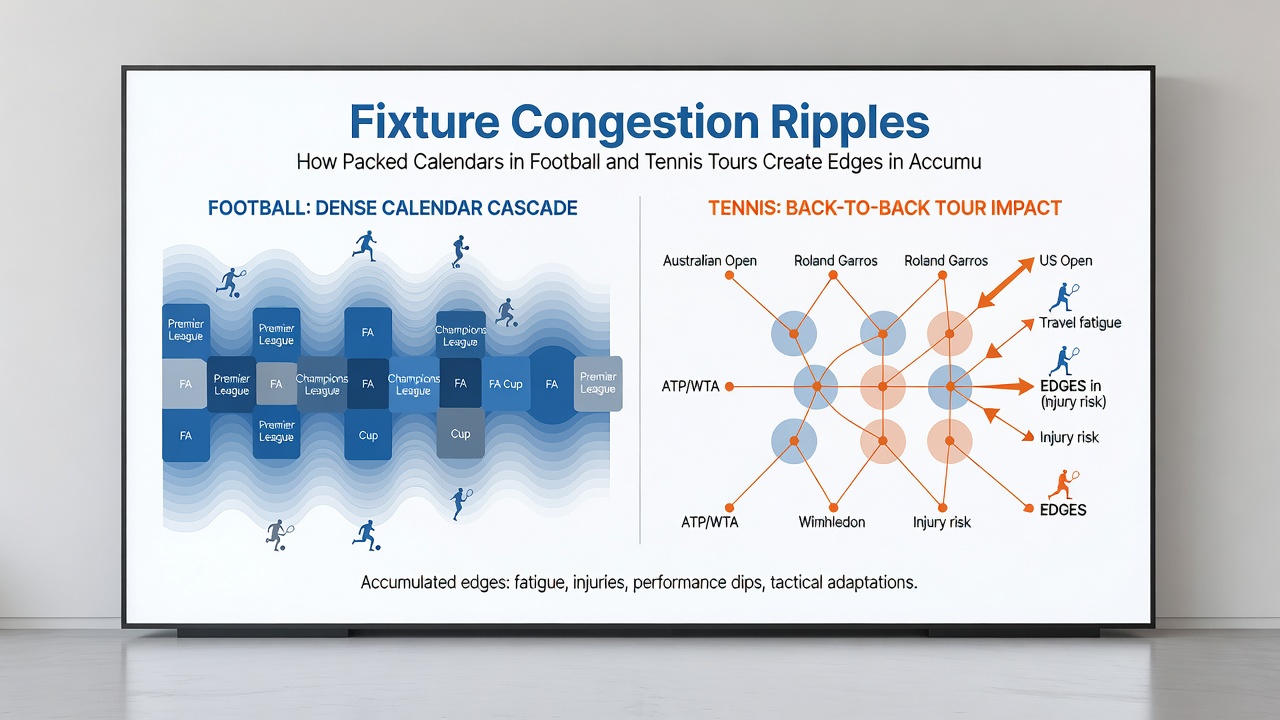
Researchers tracking ranking points and match counts observe that lower-ranked players who qualify for multiple events in short succession sometimes outperform seeded opponents dealing with cumulative match loads. Accumulator strategies capitalize on these variances by selecting sets or games where fatigue indicators appear in historical head-to-head data, combining tennis legs with football fixtures that share similar recovery constraints.
Building Accumulator Edges from Calendar Data
Accumulator construction draws on cross-sport patterns where congested schedules produce correlated outcomes, such as lower totals in football during midweek rounds and shorter match lengths in tennis after long travel. Figures from tour organizations reveal that players logging over 80 matches in a season display measurable declines in win rates during the final quarter, information that informs selections spanning late-season football and year-end tennis events. Bettors integrate travel logs and rest-day counts into models that highlight value in specific legs, for instance pairing a rested football side against a congested opponent with a tennis match where one player arrives after a three-tournament stretch.
What's interesting is how these ripples extend across regions, with South American club schedules overlapping Copa Libertadores ties and domestic leagues in ways that mirror European patterns, while Asian tennis events add further layers for multi-leg selections. Industry reports from sports analytics groups document that incorporating fixture density variables improves the stability of accumulator returns over time compared with form-only approaches.
Cross-League Integration Examples
One documented case involves European football sides in December congestion periods where mid-table teams facing back-to-back away games produced consistent under performances, which bettors paired with tennis qualifiers on indoor hard courts showing elevated upset rates. Another instance tracked Australian Open participants carrying fatigue into February ATP 250 events, where set-total overs appeared less frequently, allowing those constructing accumulators to layer corresponding football unders from congested leagues. These examples illustrate how calendar mapping feeds directly into selection criteria without relying on subjective assessments.
Links to official schedules from the ATP Tour and UEFA club competitions provide the raw data points that feed such models, enabling precise tracking of rest intervals and travel distances across both sports.
Conclusion
Fixture congestion in football and tennis generates performance data that accumulator strategies systematically incorporate through rest metrics, travel records, and historical outcome shifts. By aligning selections with documented calendar pressures rather than isolated results, those building multi-leg bets access edges rooted in measurable schedule impacts across the 2026 season and beyond.