Circadian Disruptions and Scoring Patterns: Linking Time Zone Changes to Outcomes in Football, Tennis, and Basketball Events
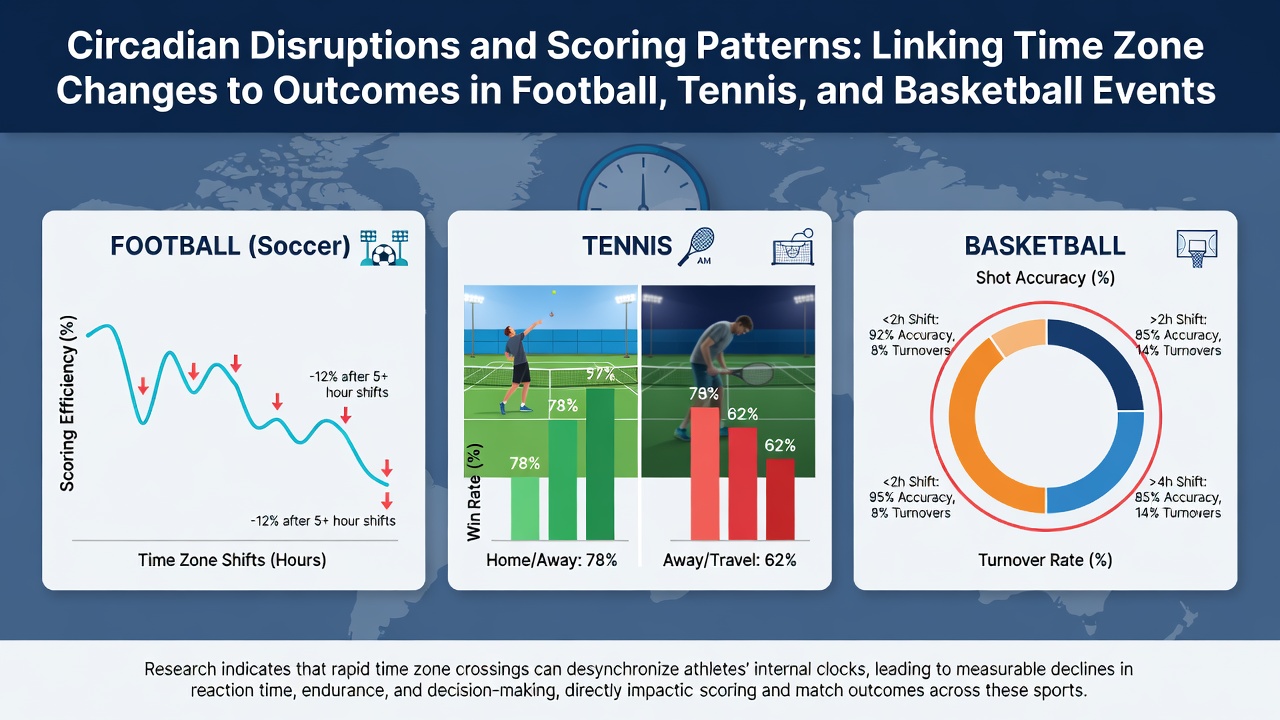
Travel across multiple time zones disrupts internal body clocks in athletes who compete in football, tennis, and basketball, and this interference shows measurable effects on scoring rates and game outcomes. Researchers track these patterns through performance data collected during international tournaments and league schedules that require rapid east-west movements. Studies from institutions such as the Australian Institute of Sport document how sleep-wake cycles shift after transcontinental flights, leading to temporary reductions in reaction time and endurance that influence point totals and goal margins.
Time Zone Shifts and Football Performance Data
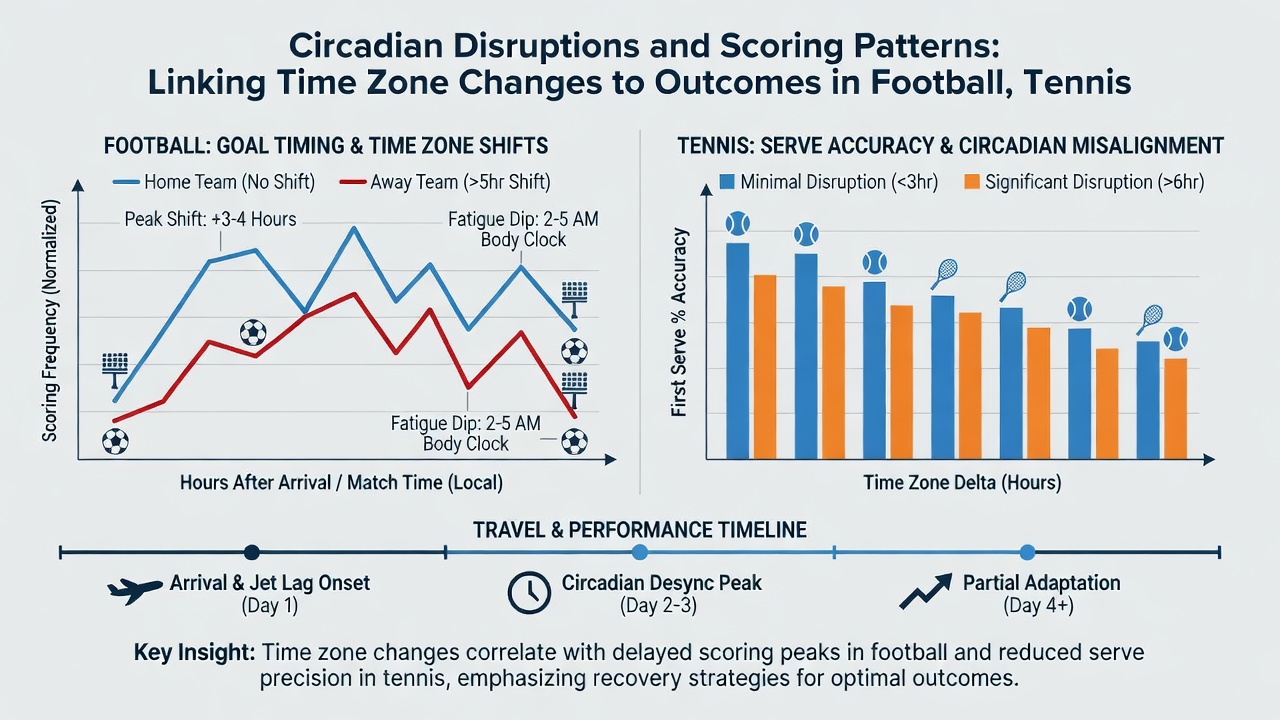
Football teams crossing five or more time zones exhibit altered scoring patterns in the first 48 hours after arrival, according to analyses of UEFA Champions League matches and FIFA World Cup qualifiers. Data collected between 2018 and 2024 reveals that squads traveling westward produce fewer goals in opening halves compared with home fixtures, while eastward travel correlates with higher concession rates during evening matches. The 2026 FIFA World Cup, scheduled for June across multiple North American venues, will require several European and South American squads to adjust to Central Time and Mountain Time zones within days of group-stage matches, creating fresh datasets for performance researchers.
Coaches implement light-exposure protocols and adjusted training windows to mitigate these effects, yet statistical reviews from the Union of European Football Associations continue to record residual impacts on sprint distances and set-piece conversion percentages. Observers note that teams arriving from Asia into European venues often display compressed scoring bursts in the final 20 minutes once circadian realignment begins, a pattern absent in domestic league encounters.
Tennis Travel and Match Outcome Variations
Professional tennis players navigate frequent intercontinental flights between Grand Slam events and ATP or WTA tournaments, and researchers link these movements to fluctuations in service hold percentages and rally lengths. A study published by the University of Queensland's School of Human Movement and Nutrition Sciences examined 1,200 matches from 2015 to 2023 and found that players crossing four or more zones record a 7 percent drop in first-serve accuracy during the initial two days post-travel. Eastward journeys produce more pronounced effects on evening matches, whereas westward travel influences morning sessions more heavily.
These shifts appear in aggregate scoring data as well. Matches involving jet-lagged competitors show extended tiebreak durations and elevated unforced error counts in deciding sets. Tournament organizers at the 2026 Australian Open and subsequent hard-court swing will again face scheduling challenges when European and American players arrive with compressed recovery windows, prompting continued monitoring by performance analysts.
Basketball Scheduling and Scoring Rhythm Changes
National Basketball Association teams undertake regular cross-country flights that span two to three time zones, and league-wide tracking data indicates measurable effects on offensive efficiency. The NBA's own injury and performance database, cross-referenced with sleep studies from the National Institutes of Health, shows that teams playing the second night of a back-to-back after westward travel average 4.2 fewer points in the first quarter. Road squads arriving from the East Coast into Pacific Time venues demonstrate reduced three-point conversion rates during the opening 12 minutes, a trend that moderates after 72 hours of local acclimatization.
International basketball competitions add further complexity. FIBA events and Olympic qualifiers often compress recovery periods for teams moving between Europe, Asia, and the Americas, and performance logs record parallel declines in defensive rebounding percentages during those windows. June 2026 will feature several preparatory tournaments ahead of the next major cycle, providing additional cases where circadian factors intersect with scoring outputs.
Comparative Patterns Across the Three Sports
Across football, tennis, and basketball, the magnitude of disruption scales with both distance traveled and direction of flight. Westward travel generally allows faster realignment because the body clock extends more easily, while eastward crossings compress sleep cycles and prolong recovery. Researchers at McMaster University in Canada compiled comparative datasets showing that basketball players experience the quickest rebound in metrics such as field-goal percentage, whereas tennis competitors require longer windows before serve consistency returns to baseline. Football squads fall between these extremes, with midfielders showing slower recovery in total distance covered than strikers or defenders.
Environmental factors compound these effects. Evening kickoffs or match times that fall during an athlete's biological night amplify the performance dip, whereas afternoon contests align more closely with adjusted circadian peaks. Data from multiple governing bodies indicate that venues using advanced lighting systems for training sessions help compress realignment periods, though complete synchronization still requires several days.
Conclusion
Time zone changes produce documented shifts in scoring patterns and outcome probabilities across football, tennis, and basketball, and governing bodies continue to collect performance metrics that quantify these relationships. As international calendars expand through June 2026 and beyond, analysts will gain additional longitudinal data to refine scheduling guidelines and recovery protocols. The intersection of circadian science and competitive results remains an active area of measurement for sports organizations worldwide.